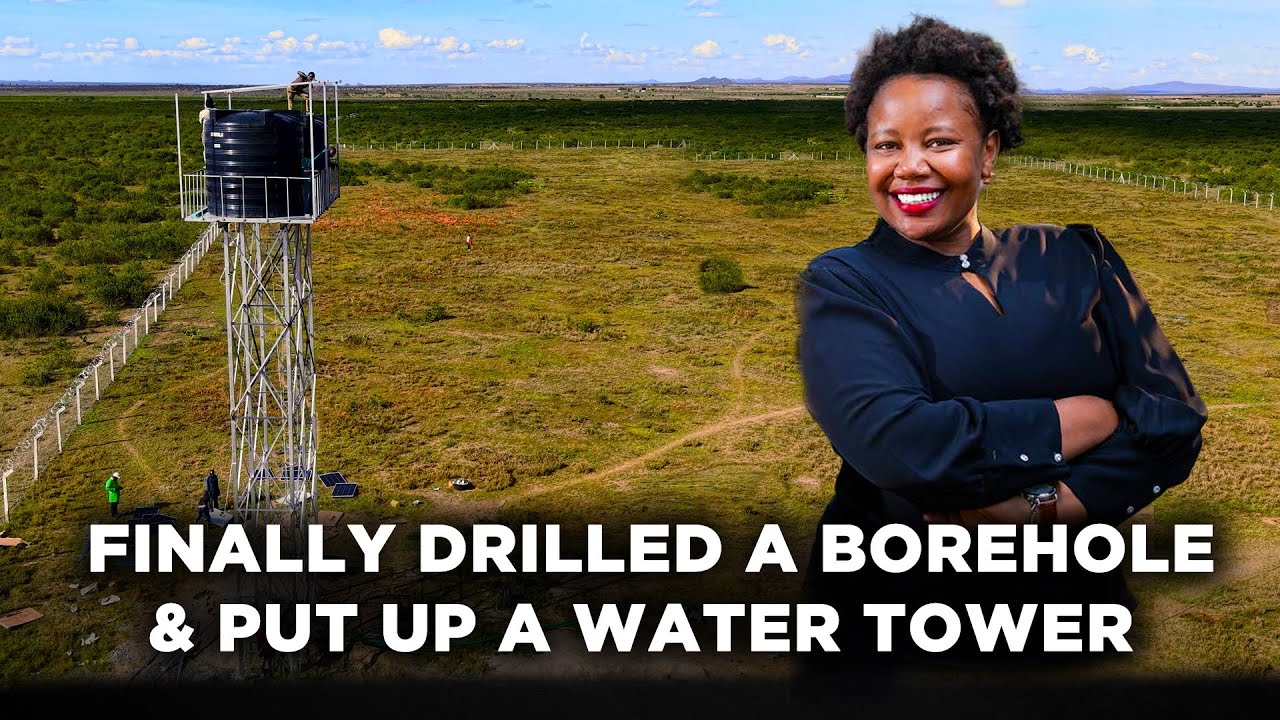
A successful borehole does not automatically mean a successful water system. After drilling, the real question becomes distribution: how will the water move, how much pressure is needed and what power source will keep the system affordable?
That is where the water tower and solar system become central. They are not decorative additions. They are what turn a hole in the ground into a usable farm network.
Why height matters
Alfred explains that the tower must be high enough to create gravity-fed pressure. That matters even more for drip irrigation, where weak pressure can leave one part of a farm supplied and another part dry.
The conversation also explains why solar makes sense despite higher upfront cost. Grid power may look cheaper initially, but solar reduces recurring pumping costs and gives a farm more predictable water access.
The broader lesson is that infrastructure should be judged by dependable water delivery, not by the fact that equipment has merely been installed.