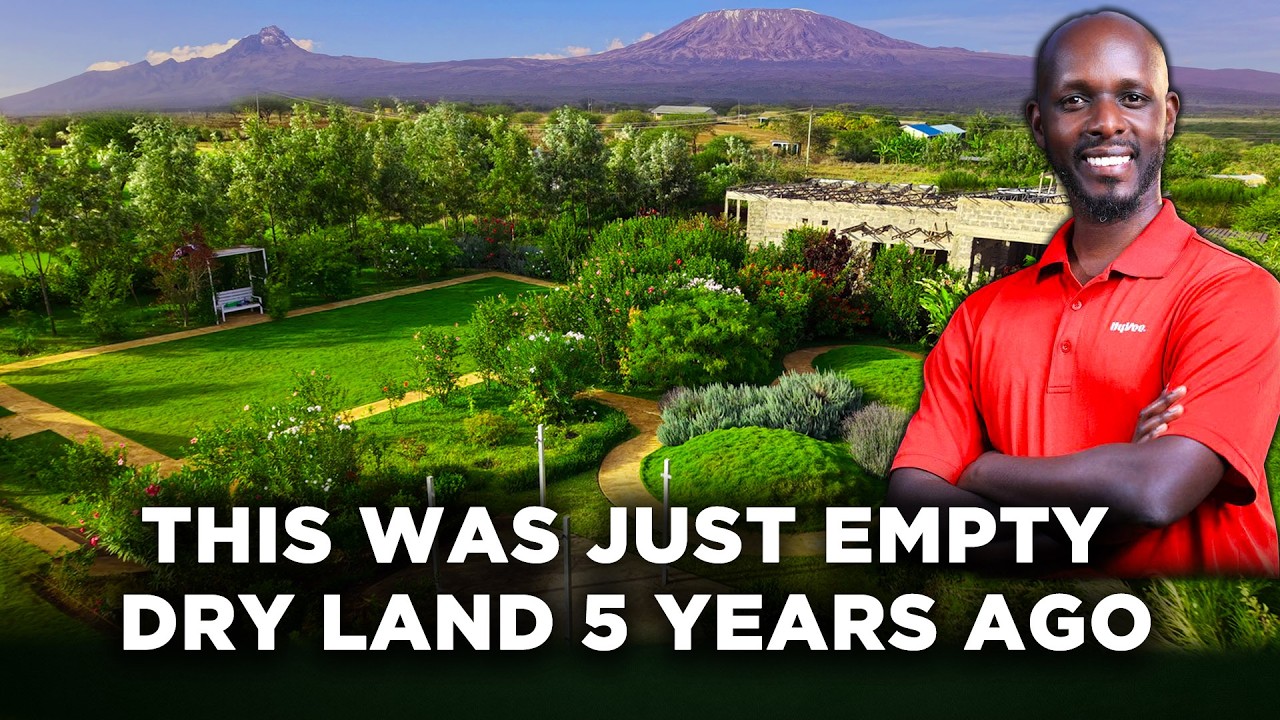
One of the most practical parts of Honest Moturi’s story is that he does not frame country living as a life detached from economics. Nature’s Crest Farm is a place of peace, but it is also a working business. The farm grows produce, keeps bees, hosts visitors and extends its design philosophy into paid landscaping work for other people building on land.
That layered model matters because it is closer to how small rural enterprises become durable. A property that depends on one product alone is fragile. A property that draws value from vegetables, passion fruits, honey, tours and planning services has more ways to hold itself up through changing seasons.
More than a produce farm
Moturi says the farm already earns from selling vegetables and passion fruits, while the apiary has created a separate honey stream. Visitors can also book tours and spend time learning how the property works. On top of that, his landscaping company applies the same edible and useful design principles to other compounds and farms.
That means the farm is not only producing crops. It is producing knowledge, experience and design value. Those are all assets, and together they broaden what country living can mean financially.
A rural business built in layers
The significance of Nature’s Crest is not that it found one shortcut to profit. It is that it kept adding sensible layers. Water systems support planting. Bees support pollination and honey. Landscaping strengthens the farm and also becomes a sellable service. Tours convert interest into income.
For readers wondering whether country living can pay, this is the more realistic answer: not always quickly, and rarely through one thing alone. But with patience, diversity and a clear point of view, land can become both a home and a serious piece of business infrastructure.