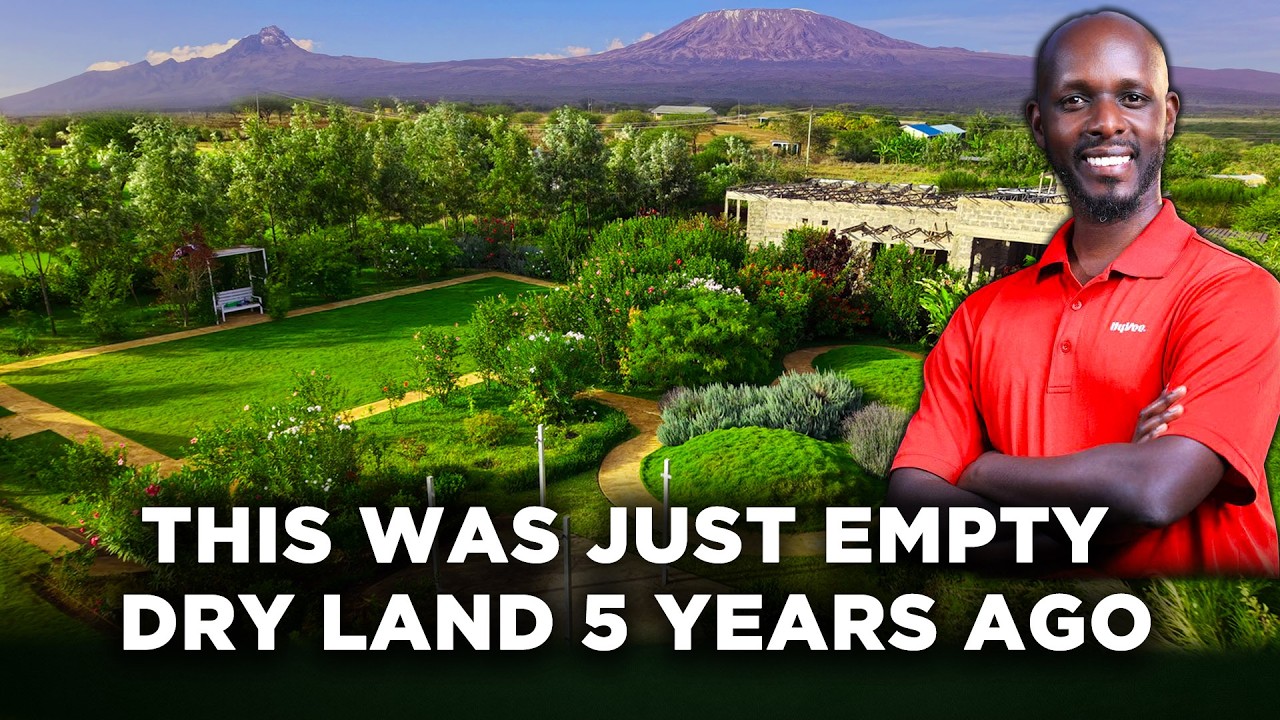
You can learn a lot about a place from the way it is planted. At Nature’s Crest Farm, the landscaping does not stop at appearance. It feeds, scents, shades and softens the home. Honest Moturi describes the ideal clearly: a fence you can eat, a path lined with herbs, fruit you can reach for without leaving the compound and greenery that does real work in everyday life.
That is the logic behind edible landscaping, one of the strongest ideas to emerge from his farm in Loitoktok. Instead of separating beauty from usefulness, the property brings them together. A mulberry hedge can offer privacy and fruit. Lavender can help shape the edge of a path while adding scent to the space. Grapes, strawberries and herbs can make the home feel lived in rather than simply decorated.
Beauty with a purpose
The appeal of this model is not just aesthetic. It asks a practical question: if land matters, why should any part of the compound do only one job? Why settle for empty ornament where a home could instead offer food, shade, privacy and atmosphere at once?
That thinking also makes slow living more tangible. It turns daily life into interaction with the space itself. A person does not only pass through the garden. They pick from it, smell it, use it and become more aware of it.
Designing a life, not just a compound
Moturi links the layout of his home to a broader philosophy of order, intention and calm. Paths have meaning. Gardens are named. Planting is tied to use. The result is a space that feels personal without becoming cluttered or random.
For readers thinking about how to build a slower life, that may be the most powerful lesson here. Slow living is not only about relocating. It is also about designing a home that supports the life you say you want to live.