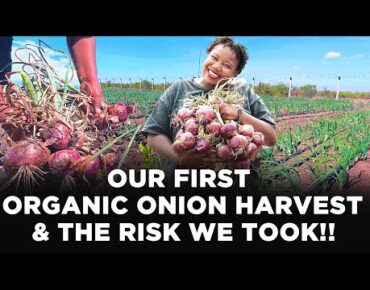
One of the clearest convictions at Nature’s Crest Farm is about seed. Honest Moturi wants to plant varieties that can be saved, replanted and carried forward season after season. For him, that is not a small gardening preference. It is part of a larger belief that households should keep as much control over their food system as they realistically can.
He speaks with urgency about dependence on commercial seed chains and chemical-heavy growing systems. Whether or not every reader shares his full interpretation of the global food economy, the practical point lands clearly: a household becomes more resilient when it knows how to grow, save and repeat.
Food autonomy begins with small habits
At the farm, this thinking shows up in everyday practices. Seeds are treated as assets, not disposable inputs. Soil is fed with mulch and manure. Companion planting helps reduce pressure from pests. Marigolds are used strategically because they draw insects away from more vulnerable crops. The goal is not a perfect farm with no challenges. The goal is a farm that can keep learning and reproducing life from within.
That approach also reframes the meaning of growing food. It is not only about harvest. It is about knowledge, continuity and the freedom that comes from not starting from zero every season.
Why this message resonates now
Across Kenya, more people are asking questions about chemicals, seed quality, food prices and soil degradation. In that context, Moturi’s insistence on heirloom seed and home production feels less like nostalgia and more like a practical response to uncertainty.
Nature’s Crest does not present self-reliance as a slogan. It presents it as work: collecting, planting, watering, saving and trying again. That is what gives the idea weight. It is not only being discussed. It is being practiced.