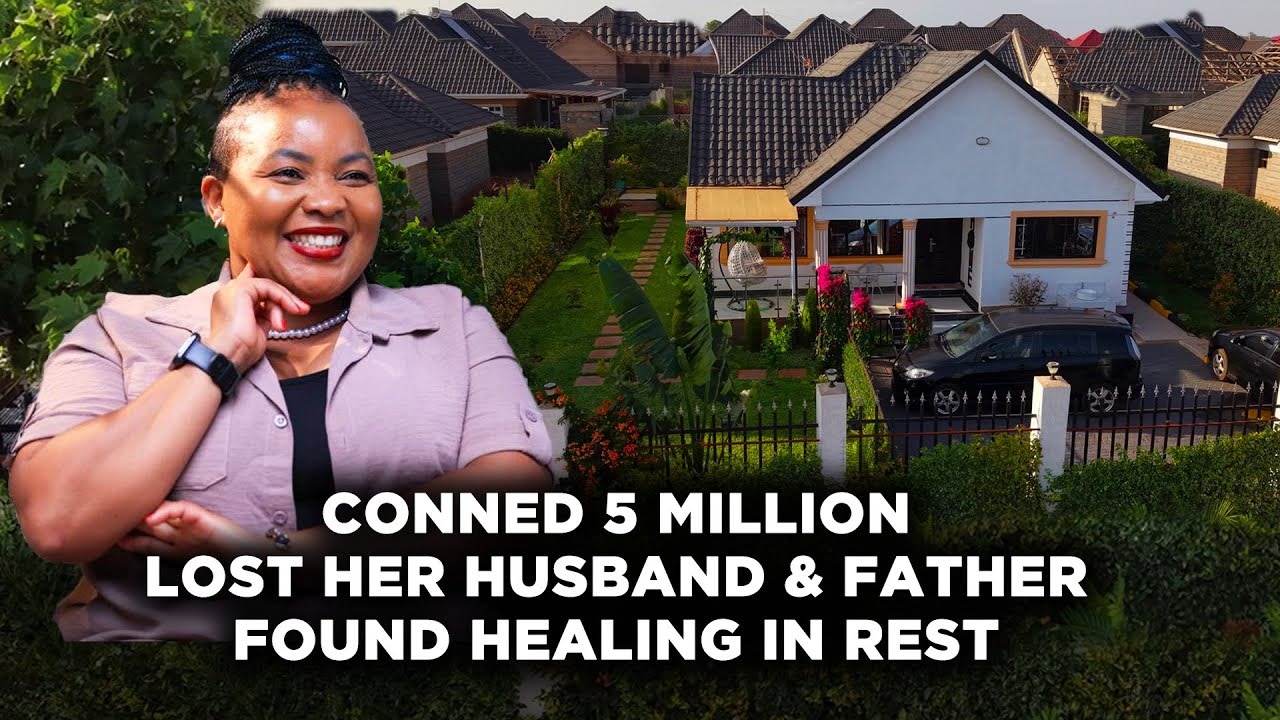
Victoria Ndunge-Wambua does not describe healing as a dramatic breakthrough. In her telling, it arrived quietly. After the death of her husband in December 2020 and the death of her father almost exactly a year later, life became a chain of hospital calls, caregiving, debt, work and motherhood. She kept moving because she had to. But the actual feeling of healing, she says, only became visible much later, after she had relocated to a calmer space on Kenyatta Road and begun living at a slower pace.
That is what makes her story striking. She did not move looking for a wellness program. She did not arrive with a polished healing plan. She says she simply wanted to finish a painful property chapter and tick one stubborn box off her to-do list. Yet the quiet that came with that decision slowly began changing her from the inside.
Healing did not arrive where she expected it
Before that shift, Victoria says she had already tried many of the things people are told will help. She tried therapy. She tried talking. She even says she went through a season of alcohol and another season of hoping a new relationship would somehow absorb her pain. None of it produced the deep reset she was looking for. Instead, she felt herself sinking further into depression, burnout and emotional exhaustion.
Her insight is uncomfortable because it challenges a popular script. Healing is often described as something visible and measurable: you are productive again, you have your routine back, you can smile in public, you are ticking goals. Victoria’s account suggests something more layered. Sometimes a person can still be functioning and still be profoundly unwell. Sometimes what restores them is not noise, speed or proof of output, but the opposite.
A house became more than a to-do list
When she finally pushed to complete the house on Kenyatta Road, the decision was practical before it was emotional. She wanted the long, draining property story to end. She wanted to stop carrying that burden in her head. But once the home became habitable and she began spending real time there, something else happened. She found herself surrounded by birds, open air, red soil, fewer interruptions and fewer demands. The environment itself began slowing her down.
She describes that change almost as an accident. She did not come to heal. She came to finish something. Then, months later, she realised she was feeling different. The constant edge had softened. Her body was calmer. Her mind was quieter. Her habits were changing. Healing, in her words, had found her.
What changed when the noise dropped
The transformation was not only emotional. Victoria says her relationship with sleep improved, her dependence on alcohol faded and her sense of self returned. She became more deliberate about boundaries, more aware of what she would and would not allow into her life. That is a major shift for someone who had spent years carrying the needs of the sick, the dead, the living and the financially unstable at the same time.
She also found restoration in ordinary things: gardening, walking barefoot on soil, sitting outside, listening to birds, watching plants grow, being home early enough to be fully present. None of these are usually marketed as major interventions. But in her life, they became deeply meaningful. They gave her back rhythm, attention and peace.
There is a reason her story resonates beyond one home or one interview. Many people are surviving loudly while collapsing quietly. Victoria’s experience offers another possibility. Healing may not always begin with a grand plan. Sometimes it begins when a person steps away from the noise long enough to hear themselves again.