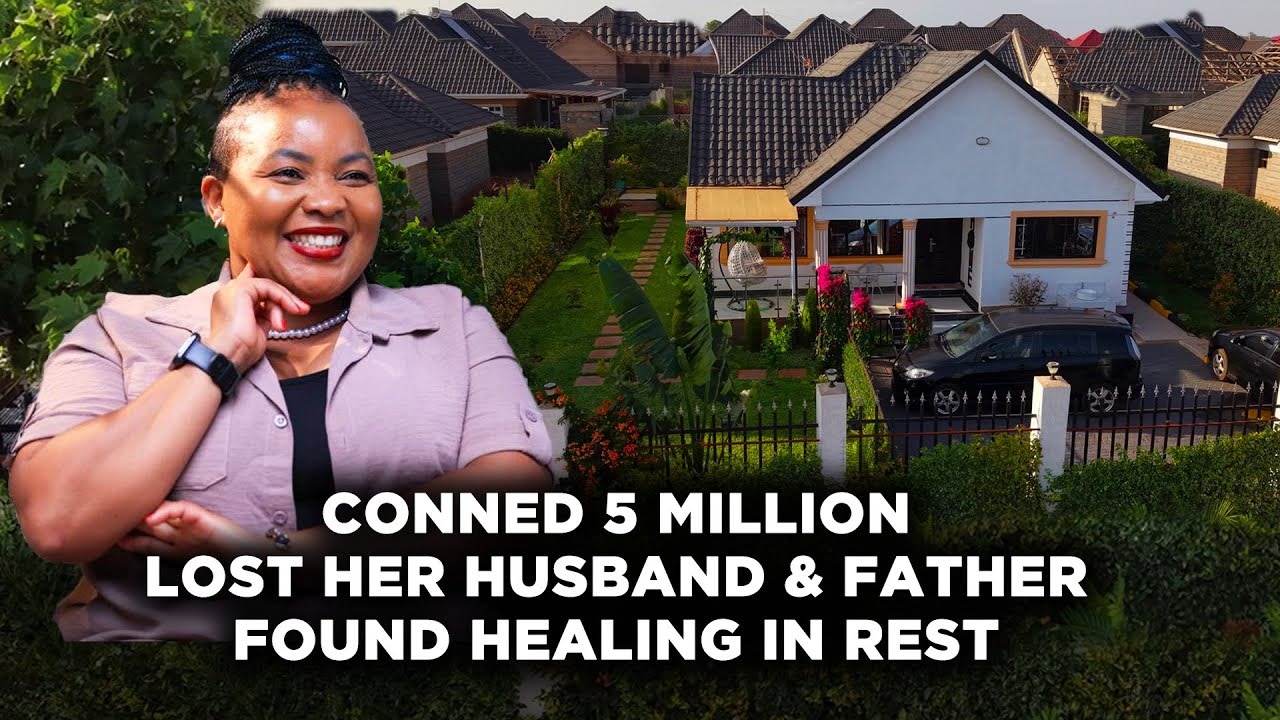
Widowhood changes a life at the level of detail. It is not only the big absences that matter. It is the daily weight that rushes in immediately after loss: the decisions, the bills, the parenting, the family politics, the unfinished plans and the impossible demand to stay functional while grief is still raw. Victoria Ndunge-Wambua’s story shows what it means to keep moving under that kind of pressure.
She had been married for 11 years. She describes her husband as her best friend. When he died, the emotional loss was already enormous. But there was no protected season in which she could disappear and fall apart. There was a child to raise, practical matters to handle and, later, a second devastating family loss when her father died too.
Parenting did not pause for grief
Victoria speaks about her daughter with clarity and gratitude. The child is not framed as a burden added to loss, but as part of what kept her anchored. That does not make the experience easy. It makes it urgent. A parent can feel broken and still have to remain useful. School continues. Feeding continues. Home continues. Emotional availability remains necessary even when the adult is internally exhausted.
This is one reason her story carries weight for other single mothers and widows. It shows that resilience is often less glamorous than it sounds. Sometimes it simply means continuing to do the next necessary thing because a child is watching and depending on you.
The work of rebuilding rarely looks clean
In public imagination, rebuilding after loss is often told as a smooth arc. A woman is broken, finds strength and then emerges transformed. Real life is rarely that neat. Victoria’s account includes debt, anxiety, postponed grief, property chaos, difficult family dynamics and the exhausting need to stay outwardly composed. Even the house that now looks beautiful came through a long and painful process.
That is why her story matters as more than inspiration. It is honest about the mess in the middle. Rebuilding does not always begin from peace. Often it begins from overload, confusion and necessity. Progress can look unattractive while it is happening.
Why she now pays attention to young widows
One of the strongest outcomes of Victoria’s journey is her concern for other women who lose spouses early. She argues that widows are often surrounded briefly and then quietly left alone with the longer, harder work of life after bereavement. Once the condolence period ends, people return to their own lives while the widow is still carrying grief, logistics, finances and parenting.
That gap matters. It means many women are forced to improvise strength in isolation. It also means mentorship and peer support can become more important than people assume. Victoria says she now wants to encourage younger widows and remind them that the end of a marriage through death does not have to become the end of selfhood, dignity or usefulness.
Starting again is not betrayal
There is a moral pressure some widows feel to remain permanently frozen, as though movement itself dishonours the dead. Victoria’s life points in another direction. She has not erased her husband or her father from her story. She speaks of both with tenderness. But she is also clear that she must keep living, parenting and becoming. That is not betrayal. It is responsibility.
Her daughter remains at the centre of that responsibility. So does her own sense of purpose. She still works. She still plans. She still mentors. She still imagines a future. That may be one of the most important messages in the interview: deep grief and real rebuilding can exist in the same life at the same time.
Widowhood changed her. Motherhood steadied her. Starting again is what she is choosing now.