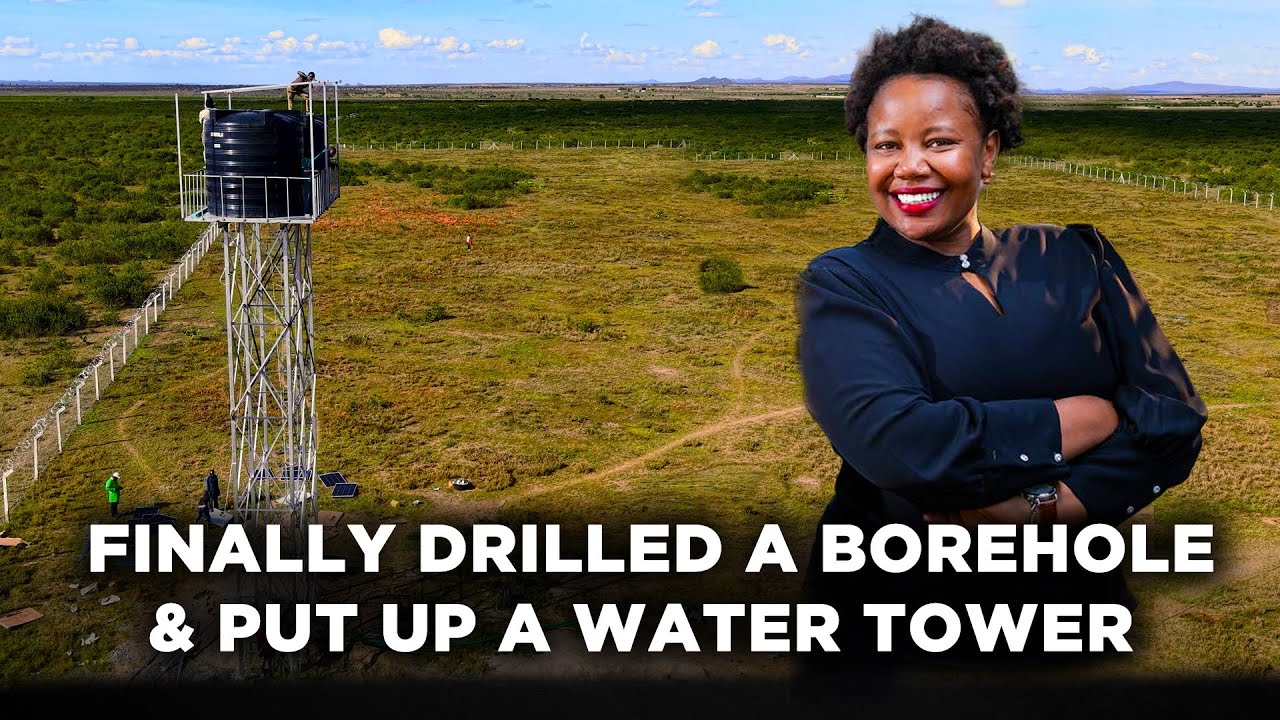
Buying Land Is Not Enough: The Real Infrastructure Cost Behind a Productive Plot
Although the episode is framed around a borehole, it is also a sharp lesson in land economics. The moment Lynn begins describing the perimeter wall, gate, borehole, water tower and solar system, the real cost of turning raw land into a productive asset comes into view.
That is why this conversation matters to prospective buyers, not just to farmers. It shows the distance between owning a title deed and having land that is ready to support work, food production and long-term value.
Ownership is only the beginning
Water has to be secured. Boundaries have to be protected. Access has to make sense. Risk from animals, theft and poor planning has to be reduced. None of that happens automatically because a buyer has acquired a plot.
The Konza discussion in the interview pushes the same point from another angle: families often need both a farm strategy and a future urban property strategy. Productive land is the result of systems, sequence and execution, not luck.
The practical takeaway is simple. Do not only ask what the land costs. Ask what it will take to make the land usable.