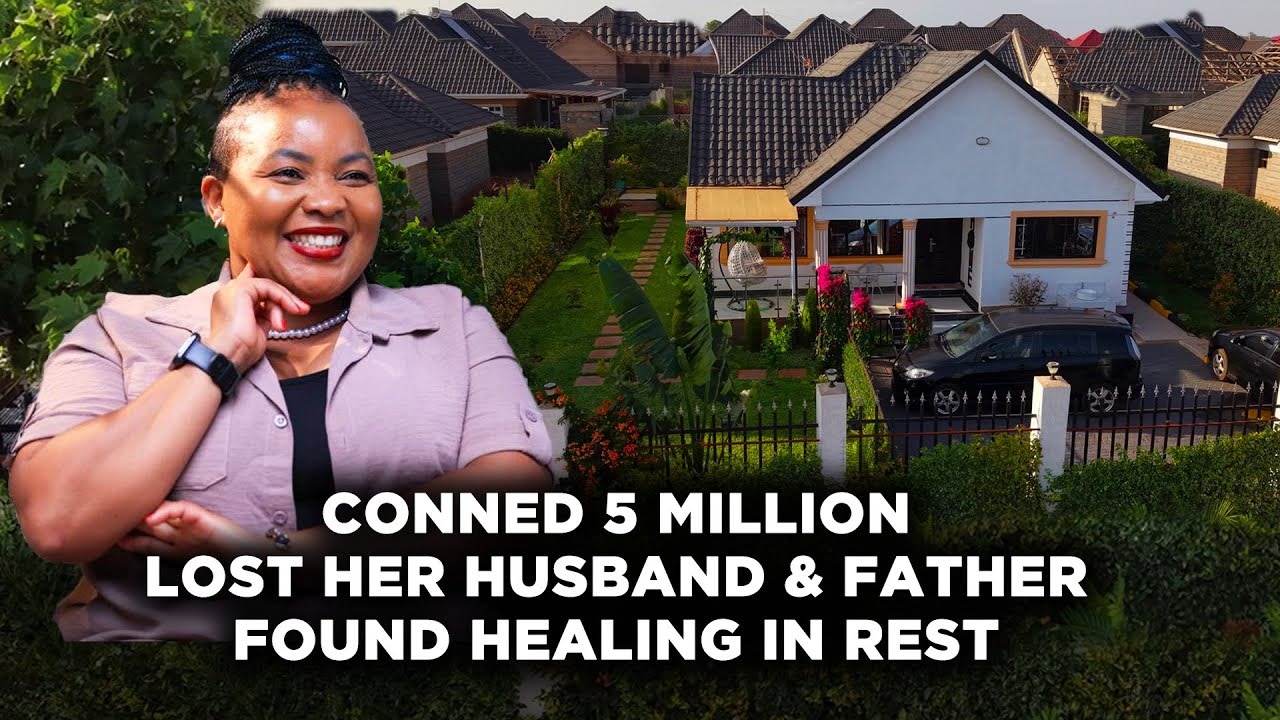
When Victoria Ndunge-Wambua and her late husband began looking for a home, they were not chasing luxury. They wanted something they could afford, something stable and something that fit the life they were trying to build. According to Victoria’s account, the promise sounded clear: pay roughly Sh5 million and receive land plus a completed bungalow on Kenyatta Road.
At the time, the offer looked like a pathway into ownership. The area was less developed, the homes being promised were modest and the developers had other visible projects along the same road. For a young couple trying to build carefully, it appeared believable. Years later, the same decision would become one of the heaviest financial and emotional burdens of Victoria’s life.
Why the offer made sense then
Victoria says the development was marketed as an off-plan opportunity: commit early, keep paying, wait for the finished house. The location was still bushy in parts, which helped the pricing feel plausible. She and her husband had also seen other projects associated with the same developer, so there was enough visible activity to support trust.
Looking back, she now sees the pricing itself as an early warning sign. In today’s market, similar bungalows in the area are selling for far more. But hindsight is clearer than the moment. At the time, the couple were young, optimistic and trying to make a practical decision. They committed.
The red flags became clearer too late
What happened next, in Victoria’s telling, is a pattern many off-plan buyers will recognise: repeated demands for more money, visible but limited movement on site and long delays that were always explained away by the next stage of progress. Meanwhile, life outside the property project was becoming harder. Her husband’s health was deteriorating, treatment costs were rising and later her father also became seriously ill. The property issue did not pause just because the rest of life was collapsing.
The turning point came when Victoria says she was directed to deliver money through a lawyer and asked a simple question about why the project remained stalled. That, she says, is when she discovered the land itself was already in dispute. According to her account, the original landowner wanted the land back and the developer had taken the matter to court. For the buyers, that changed everything. The project was not merely delayed. The foundation of the deal itself was unstable.
The second purchase that tried to save the first
After court efforts failed to produce the clarity buyers wanted, Victoria and a smaller group of affected purchasers decided to pursue a different route. They organised themselves, formed a company structure and negotiated directly with the land seller. The result, she says, was brutal but pragmatic: they had to raise additional money to buy the land again.
For many buyers, that was a deal-breaker. They had already lost too much and walked away. For others, especially those who had already paid close to the full original amount, the logic became one of damage control. If they could secure the land and eventually finish the houses, they might still salvage long-term value instead of losing everything.
The real lesson is not just about land
Victoria’s story is not only a property cautionary tale. It is also about the cost of making major financial decisions while under pressure. She was juggling illness, caregiving, bereavement, employment stress and motherhood. Due diligence becomes harder when survival is already consuming your attention. That is part of what makes off-plan risk so dangerous. It does not only test numbers. It tests patience, information and emotional stamina.
Her conclusion is not simplistic. She does not tell everyone to make the same choice she made afterward. In fact, she frames the second round of buying as a personal risk decision shaped by how much had already been lost and how far they believed they could still recover value. But her broader warning is clear: off-plan buyers should question pricing, verify land ownership, understand exactly who holds title and resist being pressured by staged impressions of progress.
Today, the site has real homes, a perimeter wall, a gate and functioning infrastructure. That gives the story a measure of recovery. But it does not erase what it took to get there. In Victoria’s account, the house was never just a house. It became an education in risk, trust, vulnerability and the real cost of trying to rescue a promise after it has already started breaking apart.