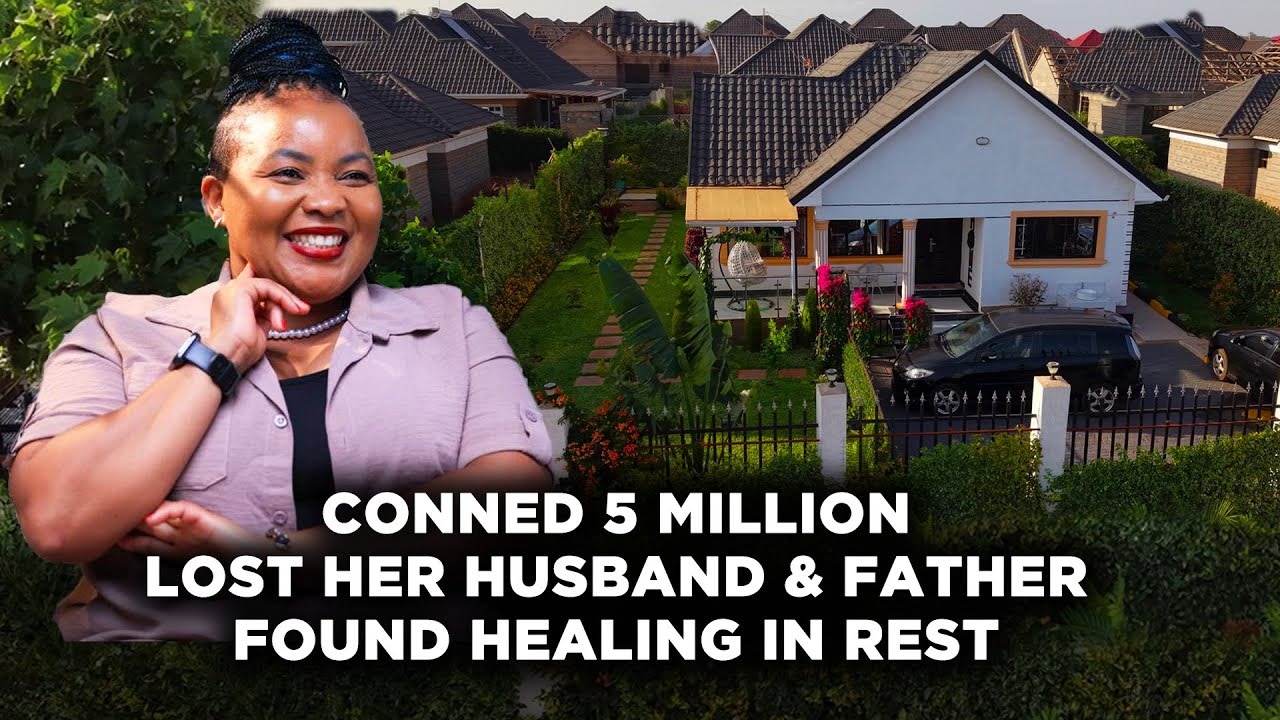
One of the most useful ideas in Victoria Ndunge-Wambua’s story is also one of the simplest: slowing down is not failure. In many urban success cultures, rest is treated as a luxury at best and a weakness at worst. Healing is often defined by productivity. If you are back at work, smiling again and meeting targets, people assume you are fine. Victoria’s experience suggests that this is a shallow reading of recovery.
For her, real rest had less to do with performing normalcy and more to do with removing pressure. It meant stepping away from unnecessary noise, reducing stressors, sleeping properly, setting boundaries and allowing life to become smaller but steadier. Importantly, she does not describe this as giving up on ambition. She describes it as finally becoming honest about what ambition should cost.
Rest is not the same as stopping life
Victoria still works. She still parents. She still plans, earns and builds. But she now measures life differently. Her baseline is not endless acceleration. It is whether the essentials are working: does she have shelter, food, school fees, a functioning routine, some financial planning and peace of mind? That is a radically different definition of success from the one many people absorb in cities.
Her insight is not anti-effort. It is anti-destruction. There is a difference between discipline and self-erasure. Slowing down, in her framing, is not abandoning purpose. It is refusing to let purpose consume the whole person.
What boundaries look like in practice
Rest became practical for Victoria in small but serious ways. She says she no longer wants people or obligations that constantly generate stress. She protects sleep. She avoids late-night schedules that leave her system overstimulated. She resists the idea that every opportunity must be pursued. She has become more selective, more deliberate and more aware of her body’s limits.
That kind of boundary-setting can sound basic until you remember the life she is emerging from. She had spent years responding to emergencies, carrying other people’s survival, navigating debt, burying loved ones and trying to maintain normal life on top of it all. When a person has lived like that, saying no is not a minor preference. It is a recovery practice.
Why sleep became part of healing
Her emphasis on sleep is especially telling. She speaks about it with the seriousness of someone who knows what prolonged disturbance can do. Deep rest is not decorative. It is restorative. It gives the nervous system a chance to stop scanning for the next crisis. It lowers the internal noise that makes everything feel urgent all the time.
That is why her account challenges a common misconception: that healing always has to look dramatic. Sometimes it looks like a person getting home earlier, protecting bedtime, waking up calmer and realising the world did not fall apart because they refused to keep running.
A smaller life can still be a full life
Perhaps the most radical part of Victoria’s worldview is her rejection of excess as the measure of success. She says she no longer wants everything. She wants enough. Enough shelter. Enough provision. Enough peace. Enough savings to avoid becoming a burden later. Enough time to be present with her daughter. Enough space to breathe.
That language matters because many people are exhausted not only by hardship, but by comparison. They are trying to keep pace with a version of success that leaves no room for the body, the mind or the soul. Victoria’s story offers a quieter ambition: build a life you can actually inhabit.
That may be one of the most important lifestyle lessons in her journey. Rest is not the opposite of seriousness. It is often the condition that makes a serious life sustainable.