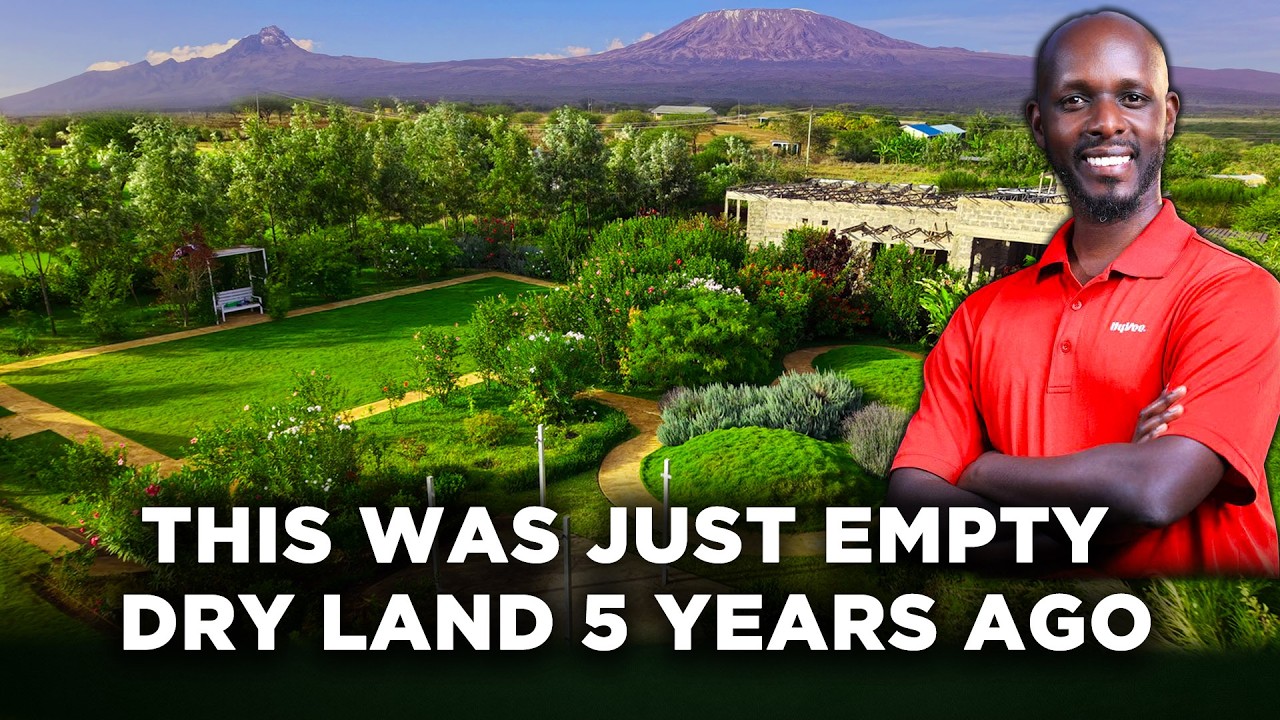
One of the most useful things about Nature’s Crest Farm is that it breaks the illusion of overnight transformation. Visitors arrive to a finished-looking space and often struggle to believe it began as bare land. But Honest Moturi is clear: what stands there now was built through phases, corrections, delays and years of steady work.
Before the trees, the herbs, the pathways and the farm tours, there was a search for land, a saving plan and the reality that not every early decision works out perfectly. Moturi says one of the first parcels he bought did not serve the purpose he intended, so he had to work again and keep looking. That alone makes the story more valuable, because it removes the fantasy and leaves the process.
Starting with what was possible
He did not begin with the whole farm. He began with the home compound and a manageable section of the land. A modest house came first. A few herbs and fruit trees came first. The landscaping and wider farming system followed as time, money and energy allowed.
That phased approach matters because it is how many rural projects actually survive. Instead of waiting for ideal conditions, he built with what was available, improved one section at a time and treated progress as something cumulative.
Why the step-by-step model matters
In a season where many Kenyans are reconsidering the countryside, Moturi’s story offers a practical lesson: a rural life does not have to be built in one dramatic leap. It can begin with one structure, one patch of soil, one water plan and one realistic stage after another.
The power of Nature’s Crest is not only that it is beautiful now. It is that the farm proves how patience can turn bare land into a home, and how a home can slowly grow into a whole way of life.